
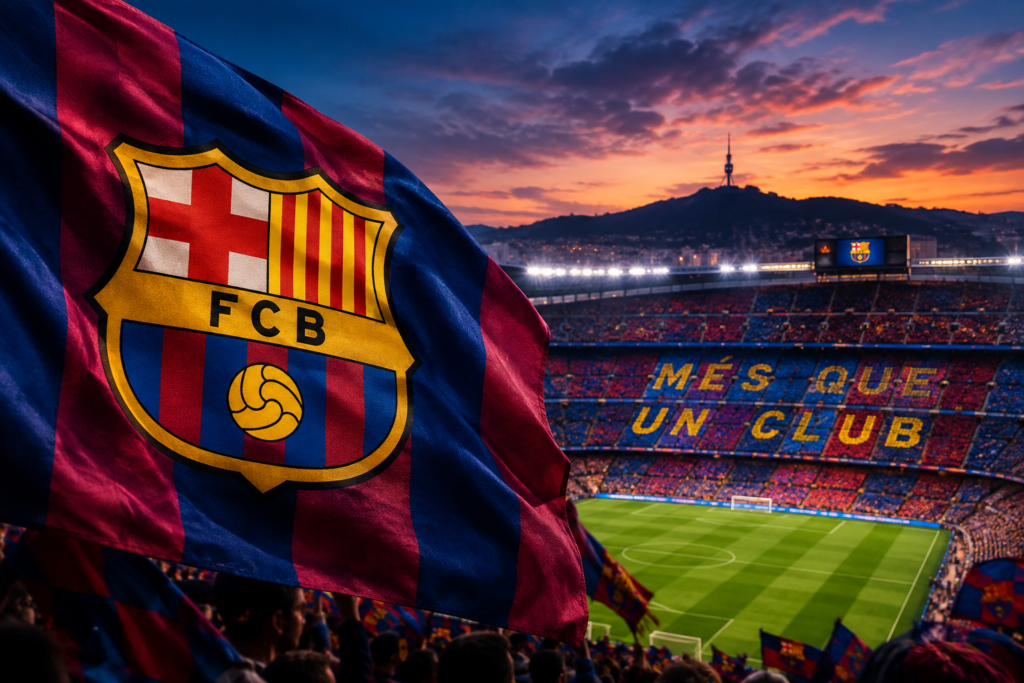
FC BARCELONA is one of the most recognized football clubs in the world. Based in Barcelona, Spain, the club has built a remarkable identity through its history, attacking football, legendary players, and passionate supporters. More than just a football team, FC Barcelona represents a distinctive sporting culture that has influenced generations of fans.

The History of FC Barcelona
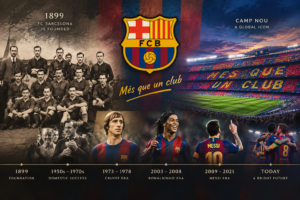
Founded in 1899 by a group led by Joan Gamper, FC Barcelona quickly became an important part of Spanish football. Over the decades, the club developed into one of Europe’s most successful teams. Its famous motto, “Més que un club,” meaning “More than a club,” reflects its strong connection with the city and Catalan culture.
The club has experienced many important periods throughout its history. Domestic league success, European trophies, and memorable performances have helped establish Barcelona as a global football powerhouse. Its famous home stadium, Camp Nou, has also become one of the most recognizable sporting venues in the world.
Over the years, FC Barcelona has grown from a local football club into a global sporting institution. Its history is shaped by memorable players, influential managers, major trophies, and a unique football philosophy. From its early beginnings to its modern success, the club has continued to inspire millions of supporters around the world.
FC BARCELONA and Its Football Philosophy
A major reason for the club’s popularity is its distinctive football philosophy. Barcelona has traditionally emphasized possession, quick passing, technical ability, movement, and intelligent positioning. This approach became especially influential during the club’s highly successful period under Pep Guardiola.
The philosophy is strongly connected with La Masia, Barcelona’s famous youth academy. La Masia has developed numerous talented players who have gone on to represent the first team and national teams. The academy’s emphasis on technical skills and tactical understanding has played an important role in the club’s identity.
Legendary Players
Throughout its history, the club has been home to some of football’s greatest players. Johan Cruyff played an important role both as a player and later as a manager. His ideas had a lasting influence on Barcelona’s style of football.
Lionel Messi is another unforgettable name in the club’s history. During his Barcelona career, Messi became one of the most successful and influential footballers ever. His goals, assists, dribbling, and creativity created countless memorable moments for supporters around the world.
Other notable players associated with the club include Xavi Hernández, Andrés Iniesta, Ronaldinho, Carles Puyol, and many more.

Global Popularity of FC BARCELONA
Today, FC BARCELONA has a huge international fan base. Supporters follow the club through television, social media, websites, and football communities. Its iconic blue-and-red colors and famous crest are instantly recognizable across the world.
The club’s global popularity is also supported by its digital presence. Social media allows fans to follow matches, players, news, interviews, training sessions, and behind-the-scenes content. This connection has helped Barcelona maintain a strong relationship with supporters across different countries.
Why FC Barcelona Remains Special
What makes FC Barcelona special is the combination of sporting ambition, history, youth development, football philosophy, and cultural identity. The club has experienced both extraordinary victories and difficult periods, but its commitment to developing talent and playing attractive football continues to inspire supporters.
For millions of fans, supporting Barcelona is not simply about watching football matches. It is about being part of a global community connected by history, passion, and a shared love for the beautiful game.
Conclusion
FC BARCELONA has created a unique legacy in world football through its trophies, legendary players, youth academy, and distinctive playing philosophy. From its foundation in 1899 to its modern global presence, the club continues to attract passionate supporters. Its history demonstrates why Barcelona remains one of football’s most influential and recognizable sporting institutions.
written by: