
Music has been a part of human culture for thousands of years, and Complete Guide to Musical Instruments is the perfect starting point for anyone interested in learning about the tools that create beautiful melodies. Whether you’re a beginner, an aspiring musician, or simply a music enthusiast, understanding different musical instruments can help you appreciate the art of music and choose the right instrument for your journey.
What Is a Complete Guide to Musical Instruments?
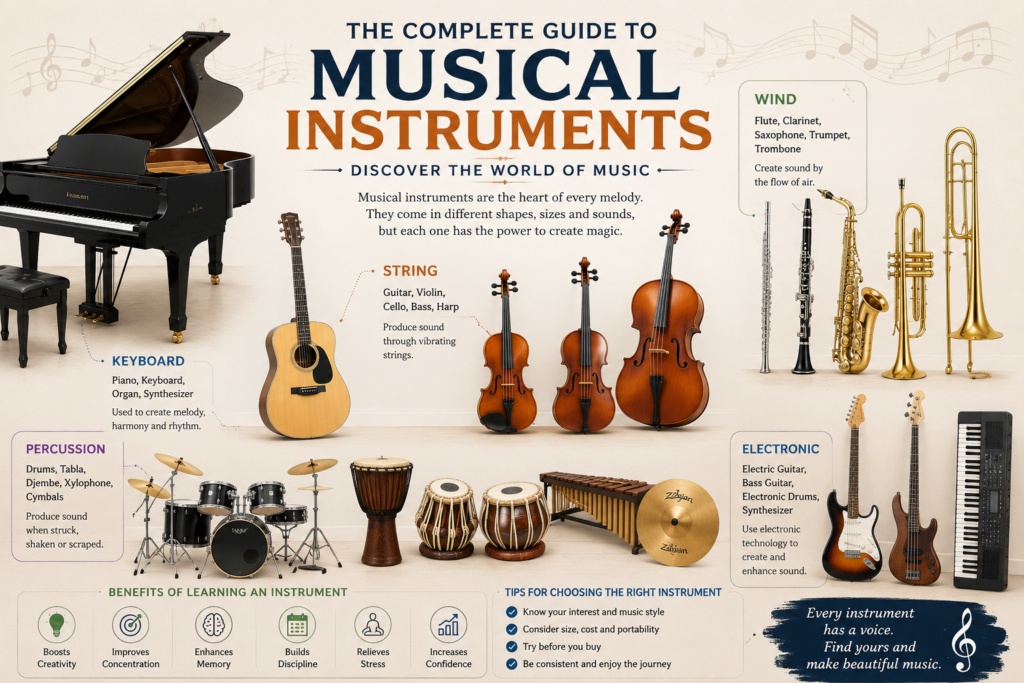
A Complete Guide to Musical Instruments explores the different types of instruments, how they produce sound, and their role in various music genres. Musical instruments are generally grouped into categories based on the way they create sound. Each category has unique characteristics and is used in classical, folk, jazz, rock, and modern music.
Learning about these categories makes it easier to understand music theory and select an instrument that matches your interests and skill level.
Types of Musical Instruments
String Instruments
String instruments produce sound through vibrating strings. They are among the oldest and most widely used instruments in the world.
Popular examples include:
- Guitar
- Violin
- Cello
- Harp
- Bass Guitar
These instruments are used in classical orchestras, pop bands, country music, and rock performances.
Wind Instruments
Wind instruments create sound when air passes through or across them. They are common in orchestras, marching bands, and jazz ensembles.
Examples include:
- Flute
- Clarinet
- Saxophone
- Trumpet
- Trombone
Each instrument produces a distinctive tone that adds depth to musical performances.
Percussion Instruments
Percussion instruments create sound when struck, shaken, or scraped. They provide rhythm and energy to almost every style of music.
Common percussion instruments include:
- Drums
- Tabla
- Cajón
- Xylophone
- Cymbals
These instruments are essential for maintaining tempo and enhancing musical expression.
Keyboard Instruments
Keyboard instruments allow musicians to play both melody and harmony, making them extremely versatile.
Popular keyboard instruments include:
- Piano
- Electronic Keyboard
- Organ
- Synthesizer
These instruments are widely used in classical music, pop, film scores, and modern digital music production.
How to Choose the Right Musical Instrument
Choosing the right instrument depends on your interests, goals, and preferred music style. Beginners should consider factors such as budget, ease of learning, portability, and availability of lessons.
For example:
- Guitar is ideal for pop and acoustic music.
- Piano builds a strong musical foundation.
- Violin is excellent for classical music.
- Drums suit those who enjoy rhythm and energetic performances.
Trying different instruments before making a purchase can help you discover which one feels most comfortable.
Benefits of Learning Musical Instruments
Learning to play a musical instrument offers many advantages beyond entertainment. It improves concentration, memory, coordination, creativity, and confidence. Playing music also reduces stress and encourages emotional expression.
Musicians often develop discipline through regular practice while improving communication and teamwork when performing with others.
Caring for Your Musical Instrument
Proper maintenance helps preserve sound quality and extends the life of your instrument.
Some essential care tips include:
- Clean your instrument after each use.
- Store it in a protective case.
- Keep it away from extreme temperatures and humidity.
- Replace worn strings, drumheads, or accessories when needed.
- Schedule professional servicing if required.
Regular care ensures your instrument performs at its best for years to come.
Conclusion
This Complete Guide to Musical Instruments provides an overview of the major instrument families and their unique characteristics. Whether you’re interested in playing guitar, piano, violin, drums, or another instrument, choosing the right one is the first step toward an enjoyable musical journey. With consistent practice and dedication, anyone can develop their skills and experience the joy of making music.
Written by Nizar Zakaria