
What Is Junk Food?
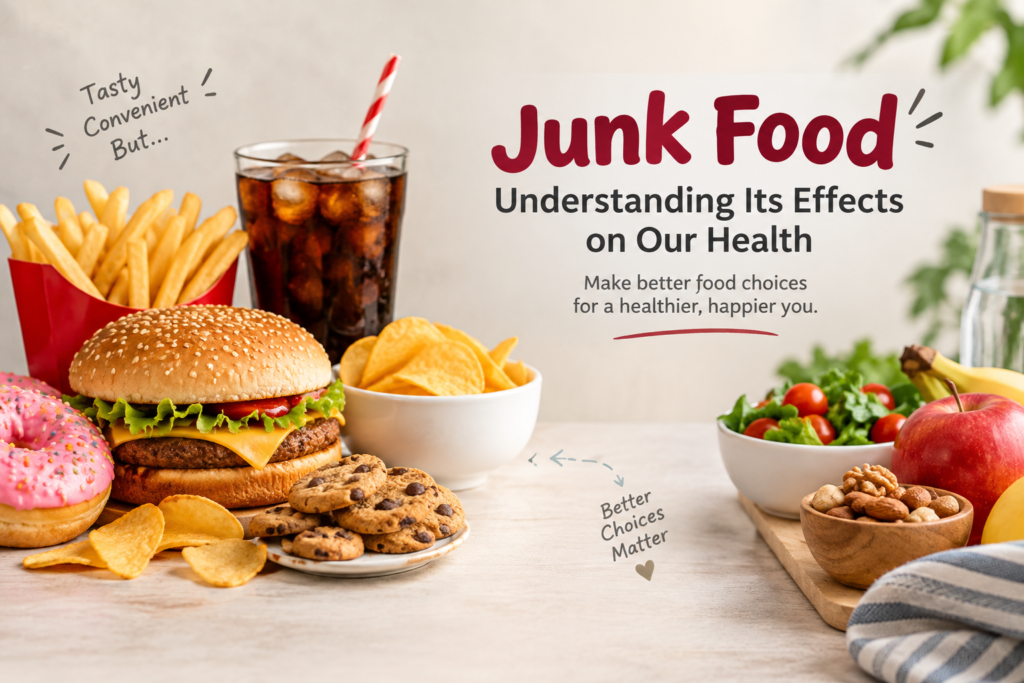
Junk food generally refers to foods that are high in calories, added sugar, unhealthy fats, and salt while providing relatively little nutritional value. Fast-food meals, sugary beverages, processed snacks, and many packaged desserts are common examples. These foods are often designed to taste appealing, which can make it difficult to control portion sizes or frequency of consumption.
The main concern is not necessarily eating these foods occasionally. The bigger problem occurs when they regularly replace nutritious foods such as fruits, vegetables, whole grains, legumes, and other nutrient-rich options.
Why Do People Choose It So Often?
Convenience is one of the biggest reasons people choose processed and fast foods. Students and working professionals may have busy schedules and prefer meals that are quick and easily available. Advertising, attractive packaging, low prices, and strong flavors can also influence food choices.
Another reason is habit. When people frequently consume highly processed snacks, they may begin to prefer their strong flavors and convenience over healthier alternatives. Developing awareness about food choices can help people make better decisions without completely giving up the foods they enjoy.

The Effects of Junk Food on Health
Regular consumption can contribute to several health concerns. Foods high in calories and unhealthy fats may contribute to excessive weight gain when eaten frequently and in large portions. High amounts of added sugar can also increase the risk of dental problems and make it harder to maintain a balanced diet.
A diet dominated by processed foods may also provide insufficient fiber, vitamins, minerals, and other nutrients that the body needs. Over time, poor dietary habits may increase the risk of lifestyle-related health problems.
How to Make Healthier Food Choices
Reducing consumption does not mean completely avoiding favorite foods. Instead, focus on balance and moderation. Try including more fresh fruits, vegetables, whole grains, nuts, seeds, and protein-rich foods in everyday meals.
Reading nutrition labels can also help you compare products and understand their amounts of sugar, salt, fat, and calories. Preparing meals at home is another useful strategy because it gives you greater control over ingredients and portion sizes.
It can also help to keep healthier snacks available. Fresh fruit, yogurt, roasted nuts, or homemade snacks can be convenient alternatives when hunger strikes between meals.

Conclusion
Making healthier food choices is an important part of maintaining a balanced lifestyle. Occasional treats can be enjoyed, but they should not become the main part of your everyday diet. By understanding the nutritional value of different foods and developing healthier eating habits, people can enjoy their favorite meals while still taking care of their long-term health.
A balanced diet, regular physical activity, adequate sleep, and mindful eating can all contribute to better overall well-being.
written by: Fathimathu shahana