

Technology is evolving rapidly, and businesses that stay ahead of emerging trends are better positioned for growth. In 2026, several innovations are transforming how organizations operate, improve efficiency, and serve customers. Understanding these software trends for businesses in 2026 can help companies remain competitive in an increasingly digital world.
1. Artificial Intelligence (AI) Becomes Mainstream
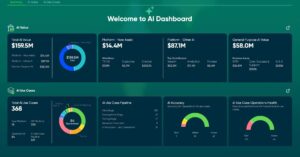
Artificial Intelligence (AI) is no longer a futuristic concept. In 2026, it has become an essential component of business software. Companies are leveraging AI-powered tools to automate repetitive tasks, analyze large datasets, improve customer service, and enhance decision-making.
AI-powered chatbots, predictive analytics platforms, and intelligent recommendation systems are helping organizations improve efficiency while reducing operational costs. Businesses that adopt AI strategically can gain valuable insights and create more personalized customer experiences.
2. Cloud Computing Continues to Grow
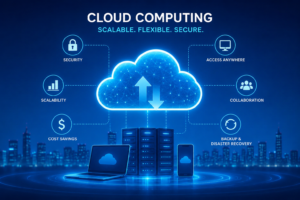
Cloud technology remains one of the most important software trends for businesses in 2026. Organizations are increasingly moving applications, databases, and infrastructure to the cloud to improve scalability and flexibility.
Cloud-based software enables teams to collaborate from anywhere while reducing the costs associated with maintaining physical servers. Many businesses are adopting hybrid and multi-cloud environments to improve reliability and minimize risks associated with vendor dependency.
Benefits of cloud computing include:
- Reduced infrastructure costs
- Improved collaboration
- Enhanced scalability
- Faster software deployment
- Better disaster recovery capabilities
3. Cybersecurity Software Takes Center Stage
As cyber threats become more sophisticated, cybersecurity software is receiving greater attention from organizations worldwide. Businesses are investing in advanced security solutions to protect sensitive data and maintain customer trust.
Modern cybersecurity software now includes:
- AI-driven threat detection
- Multi-factor authentication
- Endpoint protection
- Zero-trust security frameworks
- Automated incident response systems
Organizations that prioritize cybersecurity are better positioned to protect their operations and comply with evolving data protection regulations.
4. Low-Code and No-Code Development Platforms

Low-code and no-code platforms are transforming how businesses build software applications it is the top software trends for businesses in 2026 . These platforms allow users with limited programming knowledge to create websites, workflows, and business applications through visual interfaces.
This trend is helping organizations reduce development costs and accelerate digital transformation initiatives. Businesses can launch internal tools and customer-facing applications much faster than traditional development methods.
As demand for software solutions grows, low-code platforms are expected to play an increasingly important role in business innovation.
5. Integration and Connected Software Ecosystems
Businesses often rely on multiple software applications for daily operations. As a result, integration platforms are becoming increasingly important.
Modern software solutions are designed to work seamlessly with customer relationship management systems, accounting software, marketing platforms, and project management tools.
Connected software ecosystems improve productivity by reducing data silos and enabling smoother information sharing across departments.
6. Data Analytics Becomes More Accessible
Data-driven decision-making remains a key competitive advantage in 2026. Modern analytics software is becoming more user-friendly, enabling non-technical users to access valuable business insights.
Businesses are increasingly using analytics platforms to:
- Monitor performance metrics
- Identify customer behavior patterns
- Forecast future trends
- Optimize marketing campaigns
- Improve operational efficiency
Organizations that effectively utilize data analytics can make smarter decisions and respond more quickly to market changes.
Preparing for the Future of Business Software
The rapid pace of technological innovation presents both opportunities and challenges for organizations. Businesses that embrace emerging technologies can improve efficiency, strengthen security, and deliver better customer experiences.
Among all the software trends for businesses in 2026, artificial intelligence, cloud computing, cybersecurity and low-code development are expected to have the greatest impact on business growth.
Organizations should regularly evaluate their technology strategies and invest in solutions that align with their long-term goals. Staying informed about evolving software trends can help businesses remain competitive in an increasingly digital world.
Written by Shaziya M .